

Preparation Architecture
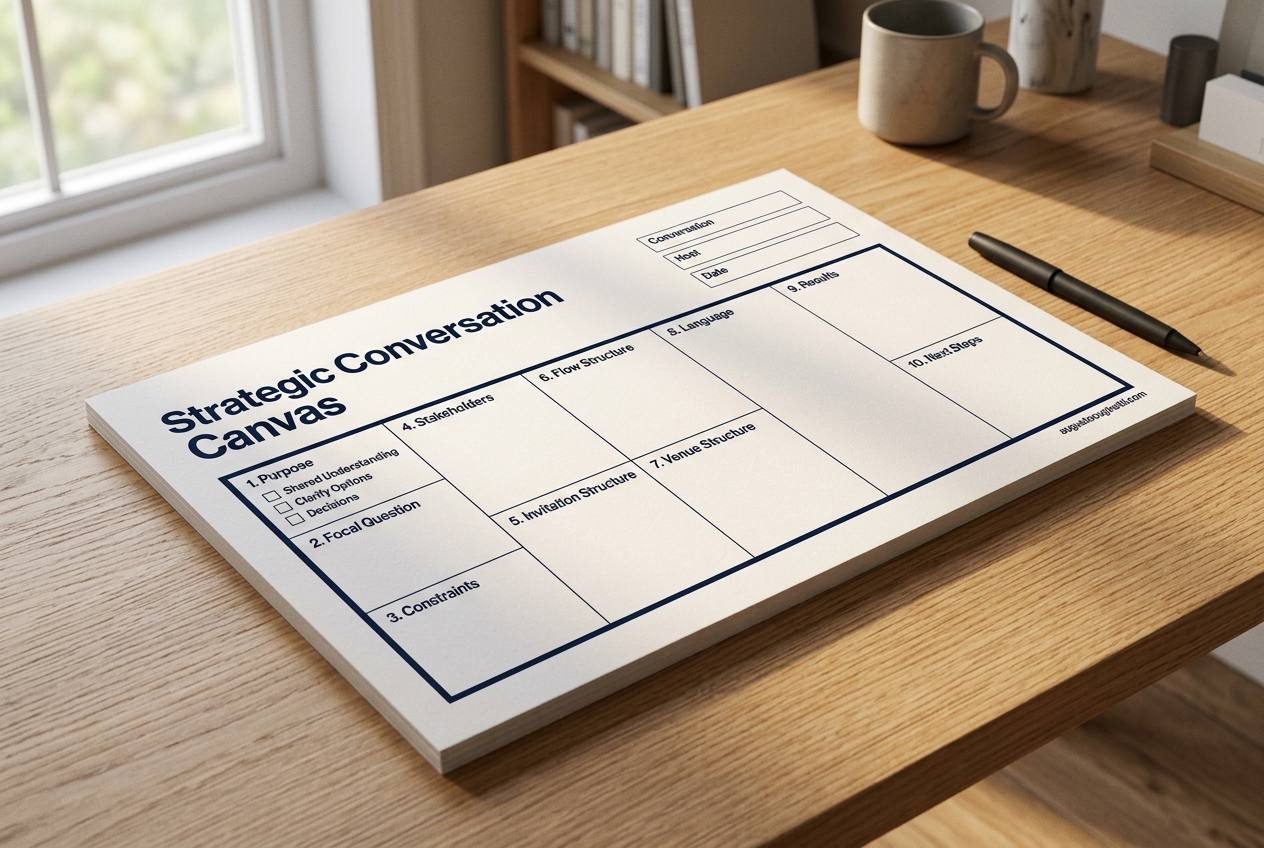
Strategic Conversation Canvas
A ten-point preparation architecture for designing high-stakes meetings, dialogue sessions, and strategic retreats before bringing people into the room.
Organizational consultant · Facilitator · Executive coach
I help leaders and teams make sense of what’s really happening in their organizations, and steer change through better conversations.
Through facilitated dialogues, narrative inquiry and Culture Sprints, I work alongside change agents to surface the dynamics that influence their reality, and help them translate into decisions people can commit to.

Collaborative inquiry, hosted dialogues, and field-tested instruments designed to navigate high-stakes transitions and culture change.
Open-access preparation architectures, dialogue protocols, and field guides refined over twenty-five years of hosting complex change.
A ten-point preparation architecture for designing high-stakes meetings, dialogue sessions, and strategic retreats before bringing people into the room.
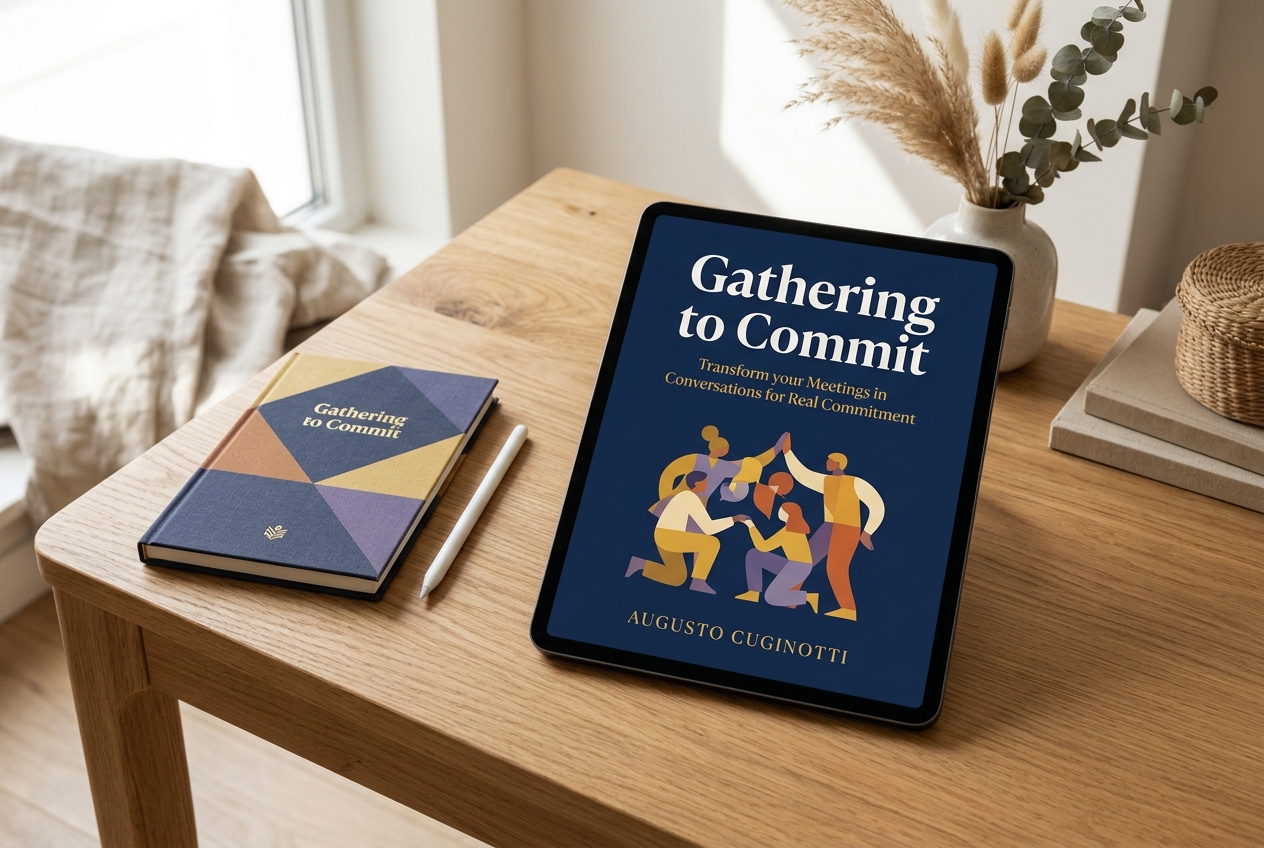
Actionable protocols grounded in Speech Acts Theory to move beyond circular debates and polite alignment into binding mutual commitments.
There is no best structure, or even controllable structure, that can float in abstraction. No such a thing as a methodological recipe that rules them all. Stepping back and creating structure to structures, like design principles or rules of engagement, also fall into the same basket. They are all useful, arguably needed, but a choice nonetheless: they allow some things while discouraging others.

There is a difference between criticising an argument and exaggerating it into an easier target. Here are three recurring misunderstandings of Luhmann's systems theory and how it impacts the work in organisational transformation.

Hosting conversation in this context means helping contain what becomes difficult in the conversation: the anxiety, ambiguity, conflict, and uncertainty that arise when established premises become available for reflection. There are other forces acting on containment in any group, but it is usually the host who takes up the explicit role of paying attention to it, bringing it forward when needed.

Why does organisational culture matter? Not to turn it into an abstract entity or a fuzzy property, but to recognise the sedimented choices and unwritten premises that directly shape how people act and decide each day. Even if we cannot map culture exhaustively or reify it into a simple object, there are specific patterns we can notice and influence.
New essays, narrative inquiry notes, and reflections on culture and change, sent occasionally.