There is always a choice of structure
There is always a choice of structure that is inherited or designed, emergent or intended. Like the unavoidable distinctions we have to draw so sense can be made, structure is what makes coherent action possible. And they both share the same characteristic of allowing some things and discouraging others.
There is no best structure, or even controllable structure, that can float in abstraction. No such a thing as a methodological recipe that rules them all. Stepping back and creating structure to structures, like design principles or rules of engagement, also fall into the same basket. They are all useful, arguably needed, but a choice nonetheless: they allow some things while discouraging others.
Categorising these choices neatly into “governing” or “enabling” constraints is an example. While that is a useful heuristic for reflection, we cannot declare in advance which is which. A rule designed to open possibilities can be experienced as stiflingly governing; a rigid boundary can unexpectedly enable radical improvisations. Whether a constraint enabled or governed is something we only discover through retrospective coherence—once we have actually lived through it and responded.
It is common to zoom in to workshops or other time-bound designed events to discuss their structure. First it is important to notice that structure has been present way before we talk about such events, and they remain long after they finish. Structure may be on top of other structures, and they may be more or less visible to who’s observing.
Depending on the layer, talking about a structured workshop is a redundancy, and we might as well call it just ‘workshop’. When we do zoom in to the event, it is the context and the power of who declares it that influence how much they are predesigned or emergent, divergent or convergent, more or less participatory.
We’ve all been through those workshops and might have judged them too loose or too tight, but they serve a purpose and are one event amongst many others. Just on the immediate before and after, we have the preparation and what is taken to account, the space and allowances it gives, etc. After, we have what has been taken, recorded, and at what level of detail or abstraction.
Now expand that from the workshops’ vicinity to the everyday coordinations of an organisation or community. It is one event in a flow of them, amongst many possible ways of encounter, including the impromptu ones we would not label a workshop or meeting, but where a lot or coordination and decision happens.
In the everyday exchanges in organisations we have plenty of meetings where the structure is culturally learned and mostly unconscious to members (based on undecidable premises). Some workshops are created for a purpose that invite the same structure, while others - because of circumstance or intent - experiment with others. Those other structures enter the system as a perturbation to open new possibilities, generate novel conversations, and sometimes bring forth premises and structures to the table.
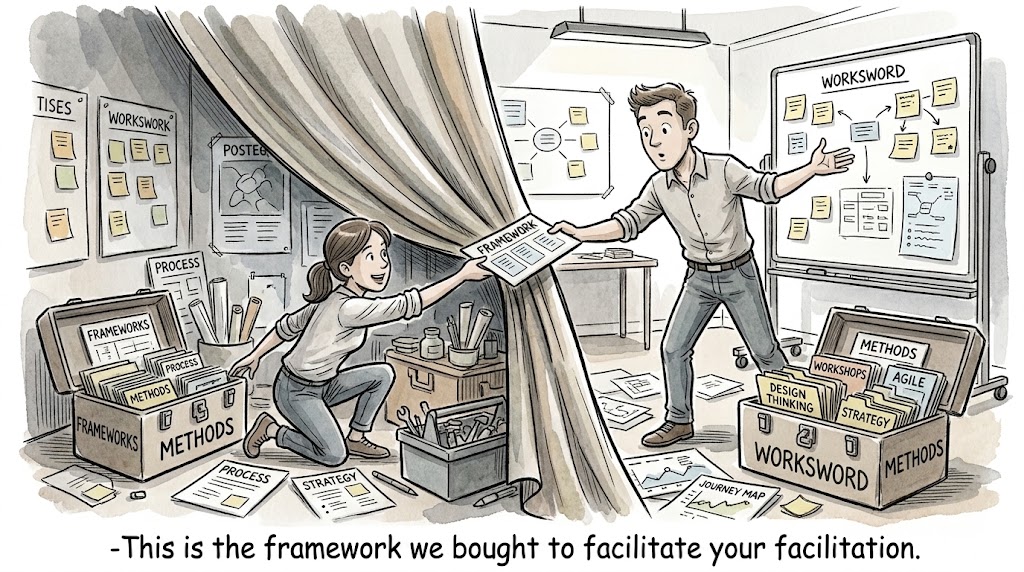
Whoever has the power or influence to summon the space can propose their design structure of choice, carry their preferred framework, etc. None of this is neutral or natural, it is all a decision with actors behind it. The process is not the workshop, and nobody can step out of the process as it unfolds.
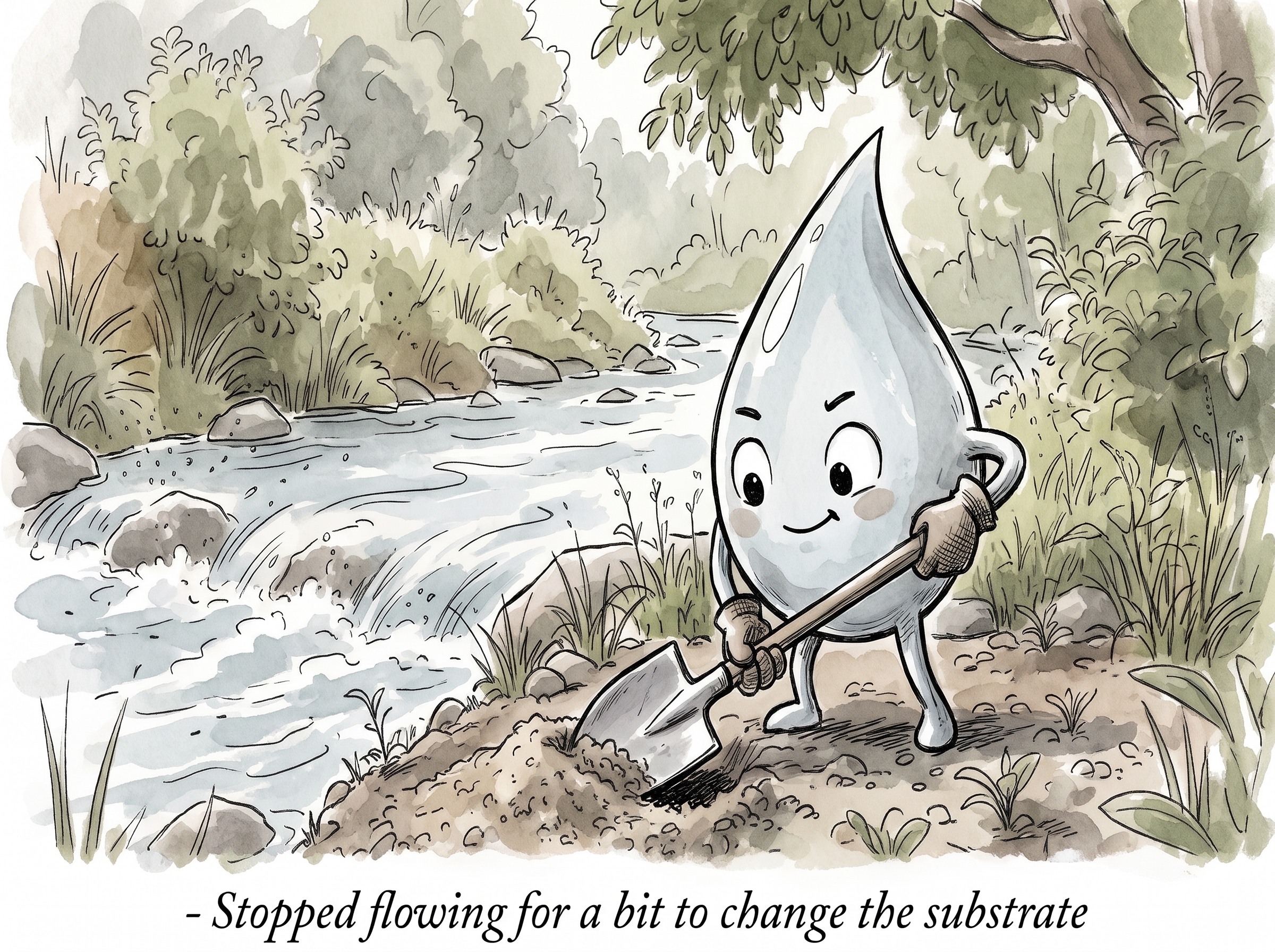
Structures that aim to be reflexive spaces are less common, although they are not exempt from all of the above. They may step into more uncomfortable structures and trigger uncomfortable conversations. They are not immediately suitable for the chain of decisions of a system, but offer space to dissolve and sometimes recombine them. They trigger anxiety as a new territory shows up, but we also develop the ability to sit with it, and that capability is as important as the revealed new.
Change won’t come from a workshop where people juggle post-its into a framework, although they can be part of the process. Change will come from the uncomfortable conversations about uncomfortable things that will emerge as the process unfolds, in the day by day interactions while people are making organisation. Could this conversation be a created and hosted space in itself? In some cases it can.
When people ask how such uncomfortable conversations can impact beyond its boundaries, they often imagine broadcasting insights, cascading policies, or aggregating data into dashboards. Scale doesn’t happen through aggregation or broadcasting, but when a decision taken in the room becomes a new premise for subsequent, recursive decisions. We cannot know in advance if it will take root or be rejected, so scale remains tethered to the local, embodied, face-to-face interactions where people continuously renegotiate what comes next, including the change of structures.
When those uncomfortable conversations are hosted, they are not about juggling abstractions or deciding on philosophies - unless the organisation is about philosophy, that is. Conversations are about facts and experiences people are having as they relate to coordinate their decisions over time.
This is not the same as an academic conference, a training programme or a learning cohort. I wrote a comment about enjoying the process of a learning conference such as the one Mowles and his colleagues host. I compared also to my choice on INSEAD’s Masters in Change. In their structure there is no past case study, but instead we are studying the case of our experiences as they unfold and we reflect on them.
This is its own structure for its own purpose and it’s not comparable to workshops in organisations. I think it does mirror a more unstructured type of conversation that is less common in organisational life and, as a mirror, it is an interesting contribution and reflection in itself. As I wrote in past posts exploring Luhmann, hosting such spaces are not trivial and can be counterproductive, so also not a silver bullet.
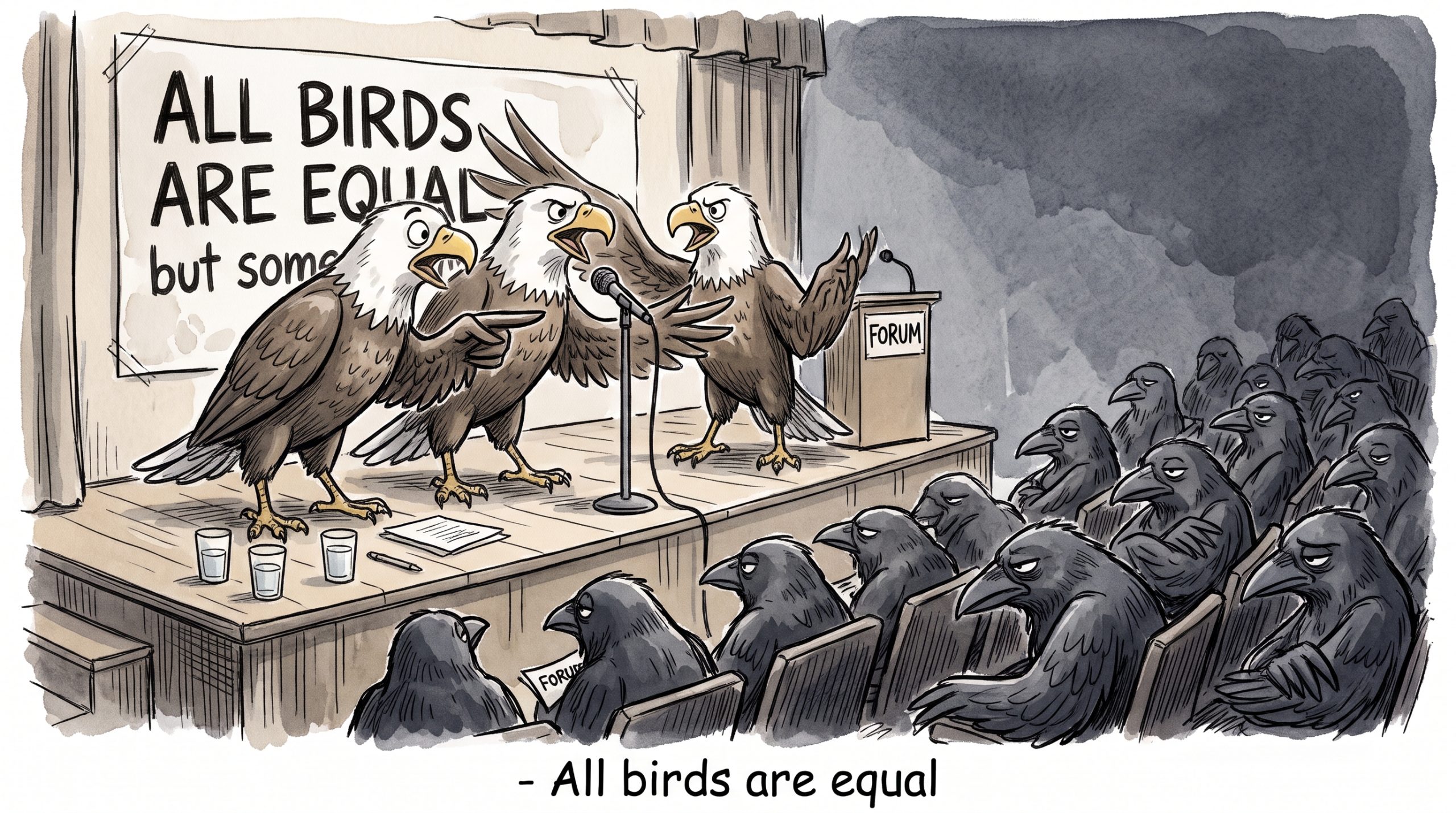
As I write this, Snowden proposed his council of animals, also a method for a purpose. If taken generically, it might be overly structured for some contexts, and too loose for others. Rather than a generic third way, the structure brings up a purpose - in this specific case it seems to be to invite a conversation he wants to have with specific Eagle people where other animals take up other roles, including silencing or participating by design. A method for what it is, the path to an objective.
All of those approaches, methods and structures have their place and they respond to the current anxieties and concerns of this time in general, and for the proponents in particular. Here is also not only about facts and science evolving, but also how we are experiencing this time while we are living it.

Written by Augusto Cuginotti
Organisational change, Narrative inquiry & Facilitation
Subscribe to the newsletter
New essays, narrative inquiry notes, and reflections on culture and change, sent occasionally.